⌂ » Cosmetic surgery »
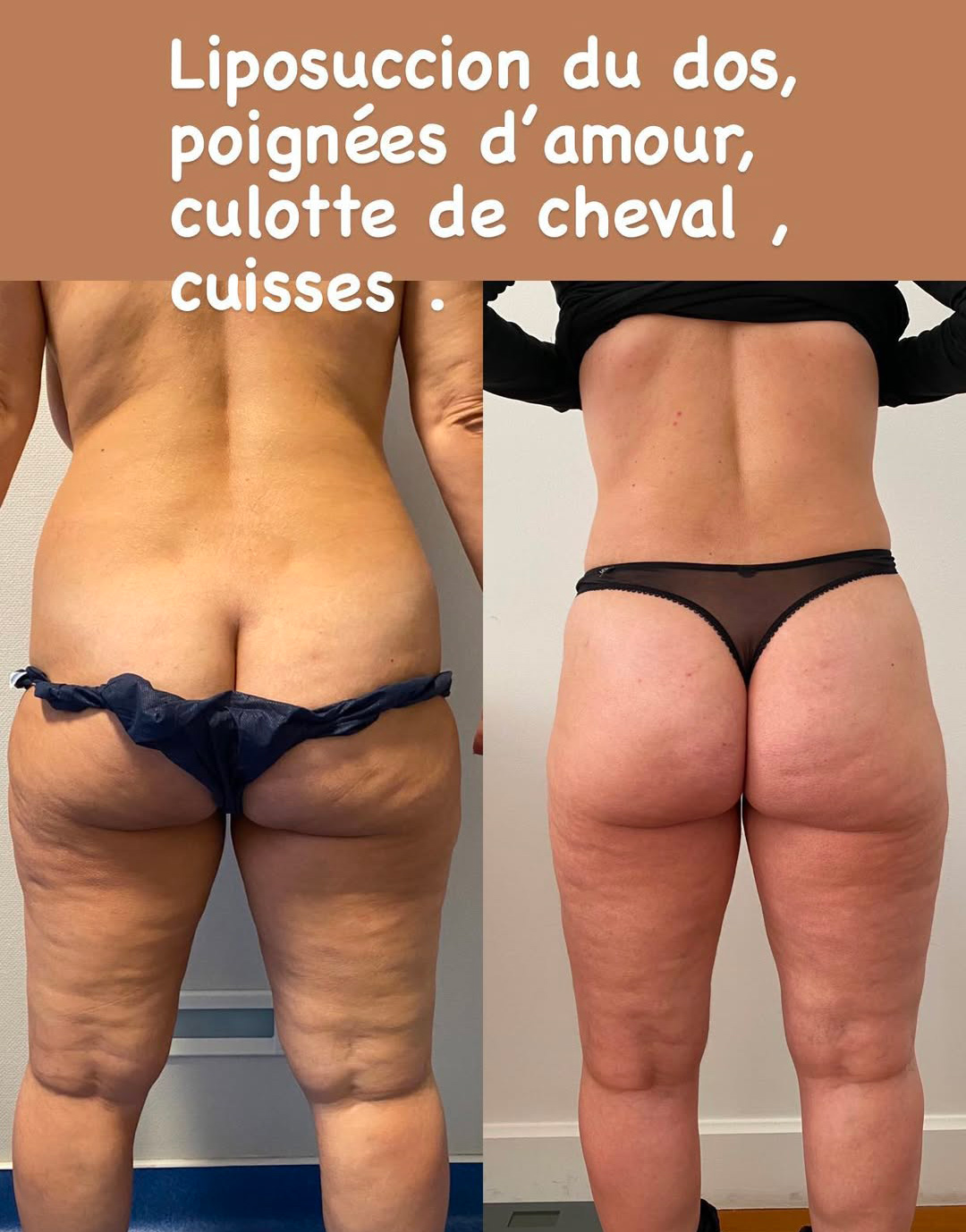
Buttock reduction
with liposuction
Liposuction, also known as lipoaspiration, is a procedure that restores balanced body contours by permanently removing localised fat.
Areas most commonly treated around the buttocks:
- The upper thighs (below the buttock crease)
- The hips (“love handles”)
- The lower back (above the buttocks)
Quick · No obligation · Confidential
The aims of surgery
Continuing advances in liposuction allow cosmetic surgery to refine your silhouette by removing deep and superficial fat evenly and effectively.
The removed fat does not return, and the scars are very discreet, measuring around three millimetres.
Why consider liposuction?
Localised fat deposits can affect body contours and may persist despite diet and exercise. Liposuction does not replace a healthy lifestyle, but can support efforts to achieve a slimmer silhouette.
The firmer your skin, the more effective the procedure will be.
The importance of your first consultation
Like any cosmetic surgery procedure, liposuction involves risks you need to understand, preoperative examinations and protocols to follow.
Your first consultation is an important opportunity to receive precise, personalised and professional answers to your questions.
The aim is for you to leave with all the information you need to make your decision.
It also allows your surgeon to assess your skin and fat, and gather the information needed to recommend the most suitable approach for you.
How is the procedure performed?
The surgeon inserts fine, blunt-tipped cannulas through skin incisions measuring around three millimetres. These are used to remove deep and superficial fat evenly, taking your skin into account.
An elastic dressing is applied at the end of surgery, sometimes together with a compression garment.
+ What type of anaesthesia is used?
Depending on the procedure, local anaesthesia, local anaesthesia with intravenous sedation or general anaesthesia may be used.
This will be discussed with your surgeon during a consultation.
+ What about scarring?
The small scars measure around three millimetres and are very discreet.
+ How long does surgery take?
The procedure takes around one hour on average, but can range from 20 minutes to three hours depending on the extent of liposuction.
What is recovery like?
The hospital stay generally lasts one day.
Recovery involves little pain thanks to the fine cannulas, and discomfort can be relieved with mild painkillers.
Bruising and swelling develop around the treated area.
A shaping dressing is applied.
Activities can usually be resumed within three to six days.
Sport and strenuous exertion are discouraged during the first three weeks.
What complications are possible?
As with any operation, complications can occur, either related to the surgical procedure or to anaesthesia.
Although complications affect only a small percentage of patients, you need to be aware of them. Your surgeon will explain all possible complications in detail during your consultations.
What results can you expect from liposuction?
The aim is to refine your silhouette and create more balanced curves.
Allow around five weeks to appreciate the final result, giving your skin time to adapt to your new contours.
A complementary approach: Liposuction followed by CelluM6 skin treatment or rolling massage can significantly reduce the appearance of cellulite.